
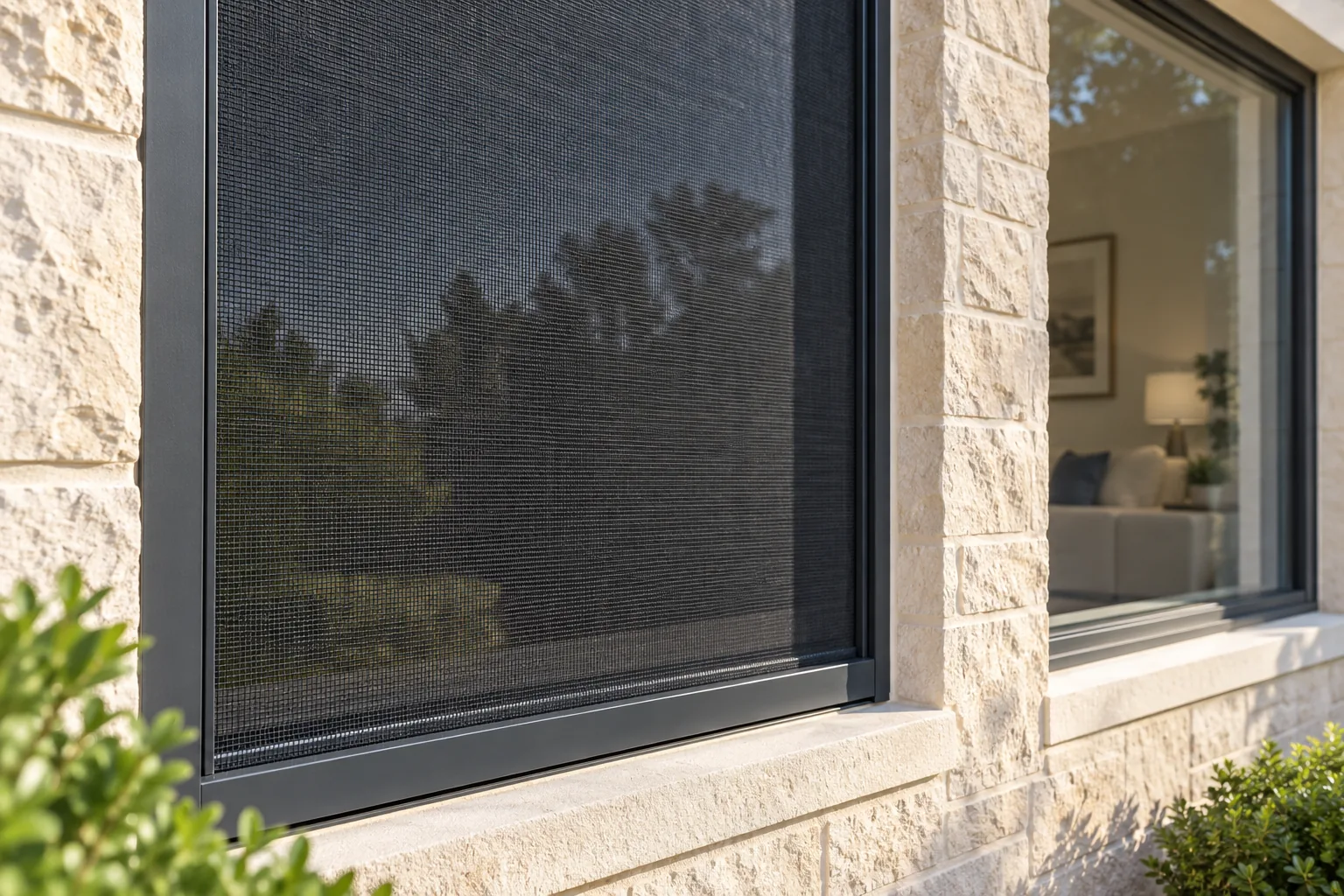
Start with window direction and use
A west-facing living room with late-day glare has a different problem from a shaded north-facing bedroom. Walk through the home during the hours that bother you, photograph the light pattern, and note whether the window is used for a view, ventilation or both. The U.S. Department of Energy describes exterior sunscreens as one way to reduce unwanted solar heat gain. It also explains that visible light and solar heat gain are related but different measures. Reducing glare by making a room too dark may be a poor choice for a valued view.
Compare the whole screen, not only the mesh label
- Ask to see the proposed mesh from inside and outside; visibility, privacy and appearance change with light direction.
- Check that the frame fits the actual opening, latches securely and can be removed when needed for window cleaning or repairs.
- Ask what happens at divided-light windows, doors and unusual shapes; a stock panel may not fit them well.
- Request the product’s published shade or solar-performance information and ask how it was tested. Avoid treating a marketing percentage as a guaranteed utility-bill saving.
The Department of Energy says shading works best when it stops sunlight before it reaches glass, but the benefit depends on the existing window and climate. A high-performance low-solar-gain window may have less remaining heat gain to block. The National Weather Service’s San Antonio normal of about 122 days a year reaching at least 90°F makes heat management a relatable local issue; it does not tell you what one screen will save in one house.
Think through cleaning before installation
Screens collect dust and can hide dirty glass. Ask whether the fabric can be washed, whether the panel is designed for repeated removal, and how the frame should be handled without bending it. If window cleaning is already planned, agree on who removes and reinstalls the screens and whether that labor is included. The current Texas Window Washing site lists solar-screen washing, removal and reinstallation, plus custom fabrication and installation; these are distinct options that should be spelled out in the estimate.
Compare two samples through the same window
A mesh swatch against a shop wall cannot show the view from your sofa. Ask to compare the proposed material at the actual opening, with the installer’s help where needed. Look from the usual seat and from outside, then consider another hour if you can retain the sample. Use the same window for both choices so a different garden view or lighting condition does not dominate the comparison. A complete sample panel also reveals the frame and attachment details that a fabric swatch leaves out. Note which tradeoff you prefer before deciding on other rooms.
Match the screen to the room
- Living room with a valued garden view: judge outward visibility from the main seat and decide how much darker the scene can become.
- Bedroom with an opening window: ask how the full panel affects normal operation, removal and later glass cleaning.
- Home office with afternoon glare: compare the sample during the hours you work, including how you use existing blinds or curtains.
- Already shaded room: identify a real complaint before adding another layer in front of the glass. A consistent exterior appearance is a preference, not evidence that every room needs the same shading.
A room-by-room example
Imagine a house with a west-facing office and a sheltered dining-room window. This is a choice example, not a measured energy study. The office occupant may accept a darker mesh because late-day glare makes the room difficult to use. The dining-room occupant may prefer the existing light and view. Asking for identical screens everywhere would hide that difference. Compare a focused installation, different suitable options, or leaving an opening unchanged. The right decision can be mixed. No sample observation or mesh label establishes a household utility-bill saving; the screen still needs to be judged alongside the existing glass and exposure.
Look beyond the first afternoon
Before committing, picture the jobs the window still needs to do: open, provide a view, admit the daylight you want, and remain accessible for cleaning or repair. Ask how the panel is released and supported, especially if nearby panels have similar sizes. If an old frame is damaged, distinguish cleaning it from replacing it. Product selection is complete only when the shade you prefer can coexist with those everyday uses. Keep the selected product and care information so a later installer or cleaner does not have to guess what is fitted.
Sources and further reading
Found the shade and view balance you want?
Compare installers on measurement, mounting and support before ordering the selected screen.
Read the solar screen installer guide