
Keep permanent property facts out of the service email chain
Create one building record for layout, elevations, window types, and known specialty glass. Give it a revision date and recognizable location names. Add photographs that help identify the actual panes, rather than a large undifferentiated folder of images. This is the reusable property reference, not evidence that every listed surface is included in every visit.
Keep changing information elsewhere: occupancy, tenant contacts, gate arrangements, preferred service time, and current glass condition belong with the dated request. A new manager can then update an access contact without overwriting useful building information. Avoid copying old access instructions merely because the last contractor used them successfully.
Order different work for occupied, vacant, and renovated units
An occupied rental may need selected exterior glass while a vacant unit can be assessed for both sides, screens, and tracks. Renovation can introduce film, adhesive, paint, or other residue that was absent from the prior visit. Tell the estimator the unit’s current state and ask for the work required now, rather than sending an old invoice with a request to repeat it.
NGA/IWCA glass guidance addresses product instructions and appropriate cleaning methods. Keep known film or coating information attached to the relevant windows so it follows the unit into the next tenancy. A vendor should not have to infer a product change from the appearance of a recently fitted pane.
Use a service matrix to compare buildings fairly
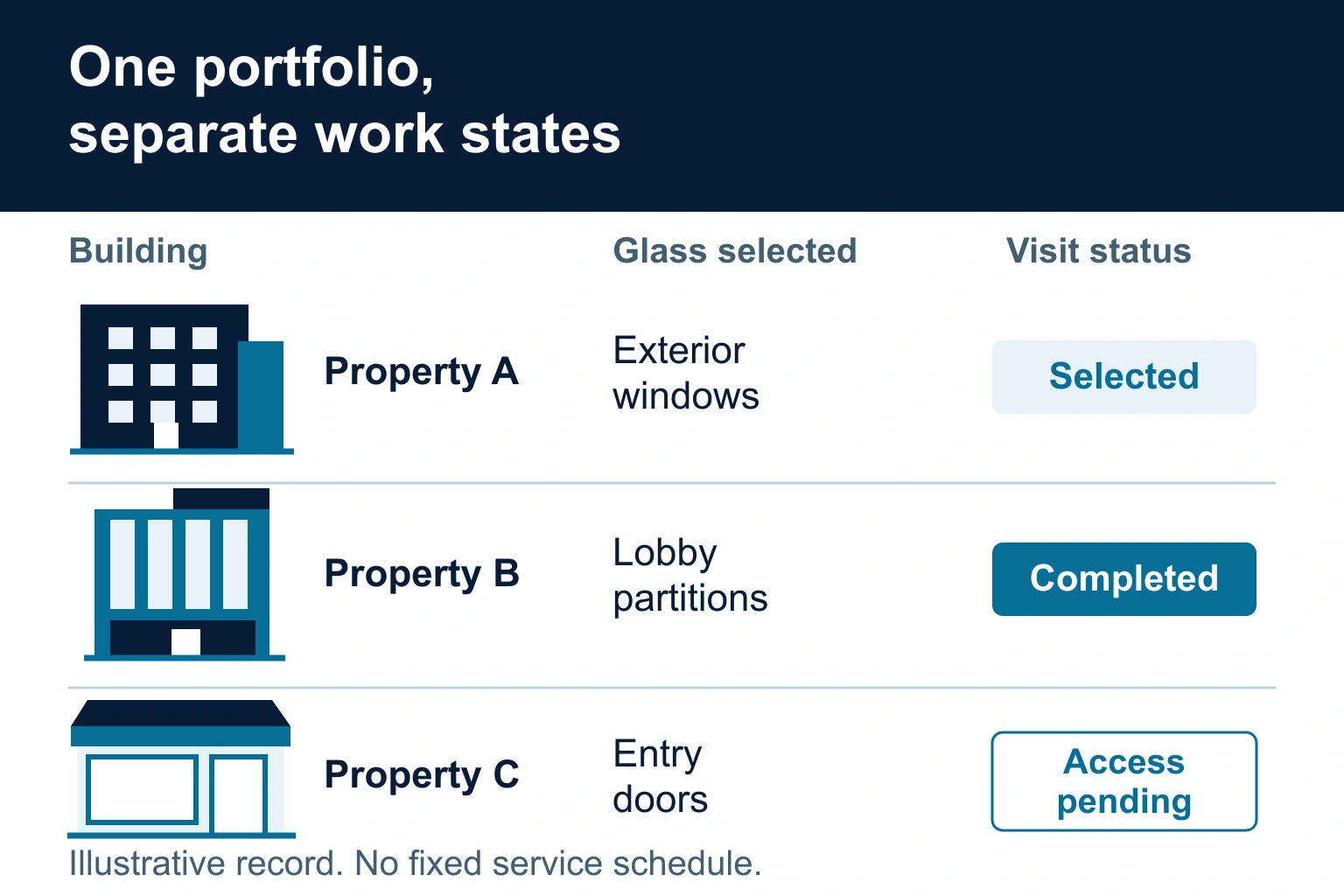
For each property, track the approved glass zones, selected sides, requested details, and visit type. Keep the estimate beside the completed request. A larger invoice may reflect a broader service rather than a price increase, while a smaller invoice may exclude work that another building receives. Compare matching tasks before drawing a portfolio-wide conclusion.
Use the same names across purchase requests, invoices, and building records. If the office calls an area the east lobby and the vendor calls it entrance three, add the connection once. Consistent identifiers are particularly useful when a central office buys the service but a local representative opens the property.
A useful property record might identify Building B, west stairwell, exterior face; its dated request then identifies whether that location is being ordered now. Keep completed work, declined work, and deferred work as different statuses. Declined means it was not purchased, while deferred means a planned item remains open. If those are merged into one not done field, a new manager may chase work the owner never approved or fail to arrange work that was paid for but could not be reached.
Turn a missed visit item into the right task
- A locked unit needs a tenant or keyholder arrangement.
- A new screen request needs a revised cleaning instruction.
- An upper pane outside the proposed method needs an equipment discussion.
- A persistent mineral mark needs a condition or treatment decision.
These items should not all become a general return visit. Identify what must change before the contractor can finish the requested work. For elevated glass, ask for a site-appropriate approach within the vendor’s capability; OSHA’s equipment-specific material provides context for the access discussion. Schedule a return only after the missing dependency is understood.
Example: a property changes managers during turnover
Imagine a vacant unit whose last service covered exterior glass, but whose new turnover request includes interior panes and track detailing. In this hypothetical example, the incoming manager can use the building record for the layout while preparing a new dated request for the expanded work. The previous invoice remains a history entry, not a specification for the new visit.
At a portfolio review, look for repeated reasons behind additions and delays. Several locked-unit returns may point to a coordination problem. Repeated requests for the same unlisted detail may indicate that the standard request needs changing. Use these specific patterns to update purchasing instructions, rather than asking each property to explain its costs from memory.
Sources and further reading
Turn a portfolio record into an occupied-site plan
For an office property, connect the building record to room availability and tenant privacy.
Prepare the office visit