
Turn the plan name into twelve months
Shine’s San Antonio North site reviewed October 30, 2026 described Shine+ as an annual property-care program with scheduled seasonal services and priority booking. Texas Window Washing’s reviewed residential page described quarterly and biannual home maintenance; its commercial page described monthly storefront and quarterly commercial options. These are advertised arrangements, not equivalent contracts.
Draw a year with one line per month. For each proposed visit, write the service and surfaces rather than the plan name: exterior windows, both sides, screens or another property task. Mark which appointments need you to be home. An annual total becomes much easier to understand when you can see when the services occur and whether they fit your household or business.
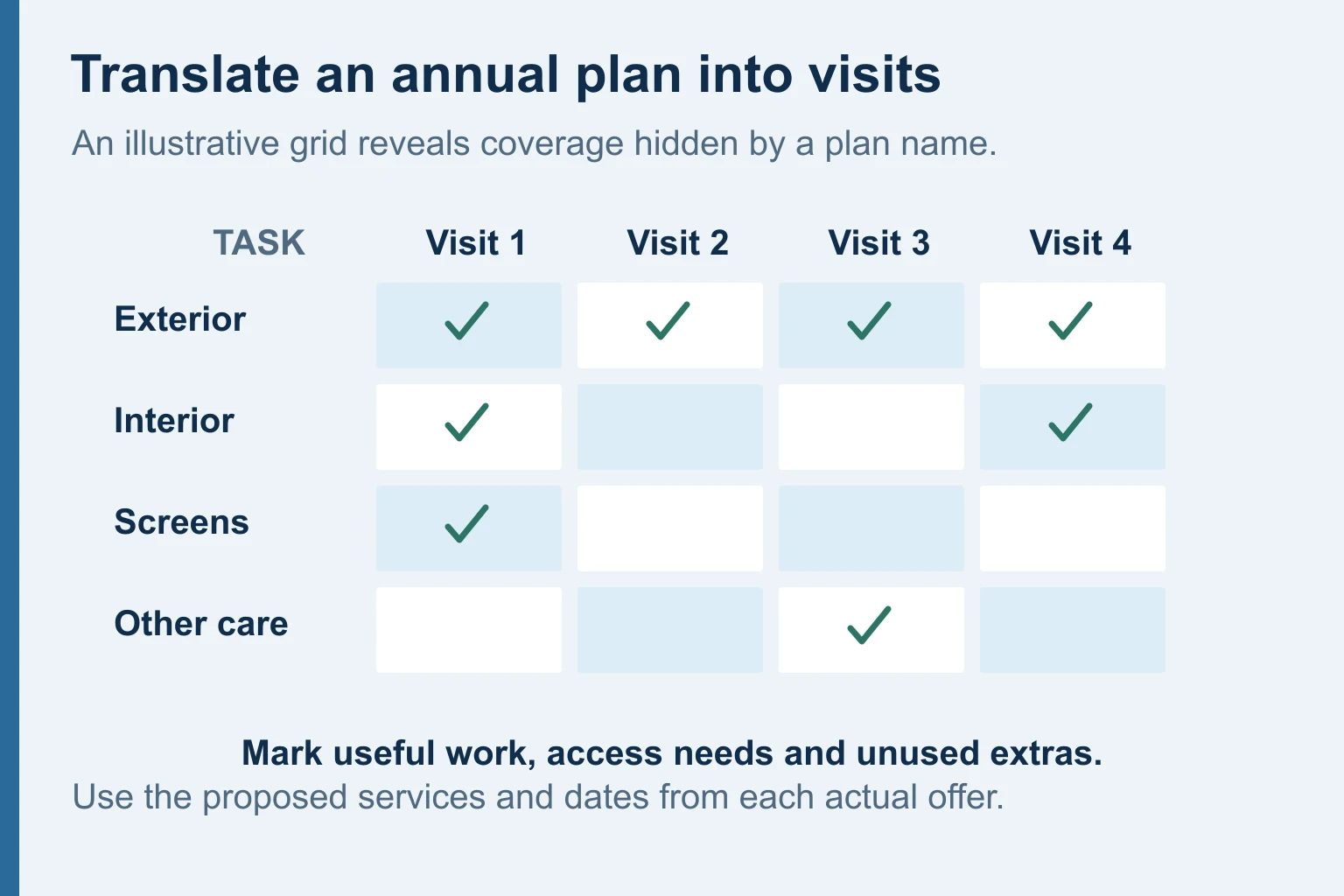
Use a service-by-visit grid
- Exterior glass: identify the included windows at each visit.
- Interior glass: show exactly which appointments include it.
- Screens and tracks: mark the visits that include the selected detail work.
- Other property services: identify what you would otherwise book separately.
- Conditional work: keep stain assessment or other separately quoted treatment visible.
A company can package these tasks differently. You do not need to force every provider into the same product; you need to see the differences. Keep an initial detail clean apart from later maintenance if their work differs. Otherwise an inexpensive repeat visit can look equivalent to a more extensive first appointment.
A home with one important date
Imagine a homeowner who wants outside glass maintained through the year but both sides and screens cleaned before a family gathering. This is a planning example. Put the gathering on the calendar, then ask whether either plan includes the needed interior visit at a useful time. Four exterior appointments do not answer that question, while a plan with fewer visits might fit it exactly.
Next, cross out extras the household would not independently purchase. They may still be convenient, but do not count their advertised value as money saved unless they replace a real expense. Compare the remaining cost and effort with arranging the useful tasks individually. A discount is meaningful only alongside a clear service calendar.
Flexibility belongs in the comparison
Ask what happens if a visit moves, a service is unused or the property’s needs change. A plan might fit well until a renovation makes its scheduled clean premature. Request the actual terms for moving appointments, ending the arrangement, credits and weather rescheduling. Do not infer a cancellation policy from priority booking or a general promise of convenience.
For a business, also check whether visits can occur within the useful operating window. A calendar with the right month but unsuitable access hours may solve little. Conversely, predictable entry-glass service can be valuable even when other panes need less frequent attention. The plan should state those differences instead of implying every window follows one rhythm.
Keep or change the plan based on use
After a service cycle, compare what you used with what you bought. Did you need the extra visit? Did an interior task remain outside the package? Did moving one appointment take more effort than expected? Those answers help choose the next term without relying on a vague impression that recurring cleaning should always be cheaper.
Shine’s reviewed menu also listed pressure washing, gutters and lighting. Texas Window Washing’s reviewed menu centered on glass, screens and solar-panel work. If those other categories matter, verify who will provide them. Then select the annual arrangement that covers the work you want at useful times, with terms you understand.
Sources and further reading
Build the useful part of the calendar
Review residential cleaning choices before comparing which ones repeat in an annual plan.
Choose your home-cleaning scope