
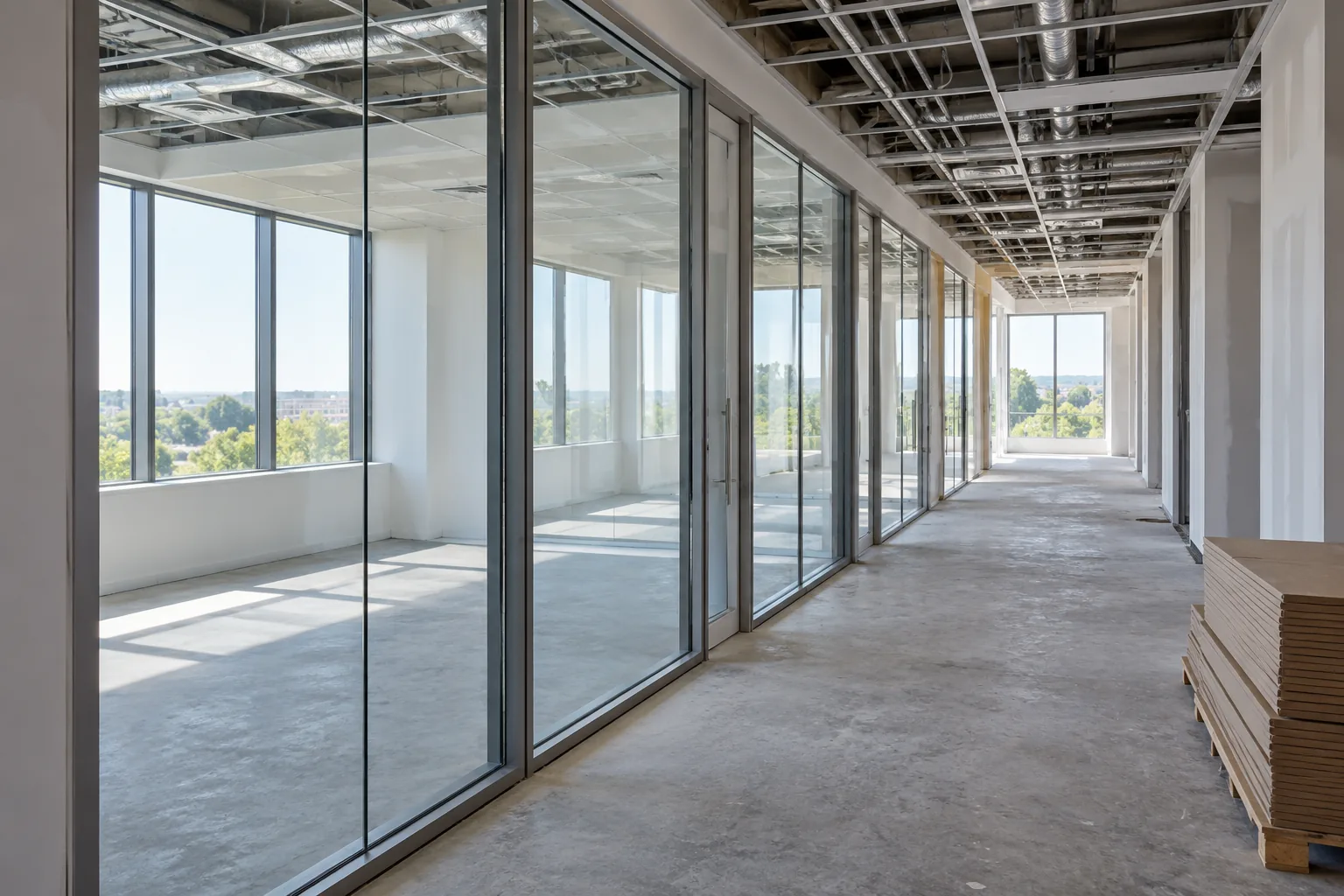
Put glazing protection into the trade sequence
Identify the activities near installed glass: cutting, grinding, painting, rendering, sealing, exterior washdown, and moving materials through openings. Ask the project team how the glazing will be protected during those activities and who checks that protection after work moves to another area. NGA construction guidance emphasizes protection and maintenance throughout the project. A late cleaning allowance does not replace that coordination.
Pass available glass-maker instructions to the relevant trades and cleaning bidder. Identify any restriction on film or label removal. Where temporary protection remains, decide who removes it and at what stage. Do not allow a broad instruction to remove everything before handover to replace the product-specific information supplied for the installation.
Hold the final wash until nearby dirty work is resolved
A booked date is not enough to establish readiness. Ask the superintendent to check the immediate surroundings: is the adjacent painting finished, will signage installation return, and is another exterior wash planned? Decide whether the glass can receive its intended final wash or whether it belongs in a later package. The objective is to avoid cleaning an area simply because it appears on Friday’s schedule.
Some projects need an interim wash so other work can proceed or a client can inspect an area. Describe that visit as interim and retain the later final-clean task. If the contractor chooses a split visit, obtain the cleaning proposal for that sequence. Do not count the same allowance twice or assume a return trip is included in the first appointment.
Ask whether another trade’s temporary equipment is part of the proposed approach to the glass. Equipment present on site does not automatically become available to the cleaning contractor. Resolve permissions, suitability, and the planned method through the responsible project contacts before sequencing work around it. If the equipment will be removed earlier, revise the glass plan while there is still time to arrange the required approach. This is a readiness dependency, just as unresolved painting or an obstructed work area is.
Example: signage is still due at the entrance
Imagine a hypothetical entrance where painting is finished but sign installers still need to work beside the glass. The contractor has three practical choices: hold the entrance clean until the sign is complete, release unaffected panes, or arrange an interim clean with a later finish visit. Compare those choices against the actual opening date and the work required. There is no universal sequence that makes unfinished neighboring work disappear.
Tell the cleaner which choice has been made and show the boundary on the site drawing. If the sign installation changes dates, update the cleaning sequence before the crew arrives. This is a coordination decision for the project team, not an instruction for the cleaner to negotiate priority with whichever trade is present.
Treat unexpected residue as a method question
Paint, sealant, adhesive, and ordinary dust should not be bundled into one promise of clean glass. Supply known product information and photographs when asking for the bid. The NGA/IWCA guidance recommends appropriate methods, attention to coatings, and a test clean for uncertain conditions; routine metal scraping is not its standard approach.
When an unlisted condition appears, identify the pane and pause the affected treatment while the project contact considers the proposed method. Keep the observation separate from an allegation about which trade caused it. A cleaner’s photograph can establish a visible condition without establishing responsibility for damage. That distinction helps the superintendent bring the right person into the discussion.
Close the cleaning task without losing construction items
- Ready for wash: the area is released and the intended visit can proceed.
- Interim clean: the area remains exposed to planned trade activity.
- Awaiting treatment decision: a specific residue or surface needs further evaluation.
- Glazing review: a suspected defect belongs with the appropriate project team.
Use those descriptions on the punch list instead of leaving every concern under windows dirty. Match the final cleaning notes to the project’s pane or elevation identifiers. The superintendent can then schedule remaining trade work, authorize a justified return, or refer a glazing concern without reopening the entire cleaning package.
Sources and further reading
Resolve the glass punch items
Separate routine soil, uncertain residue, and glazing questions before requesting the final treatment.
Build the glass punch list