
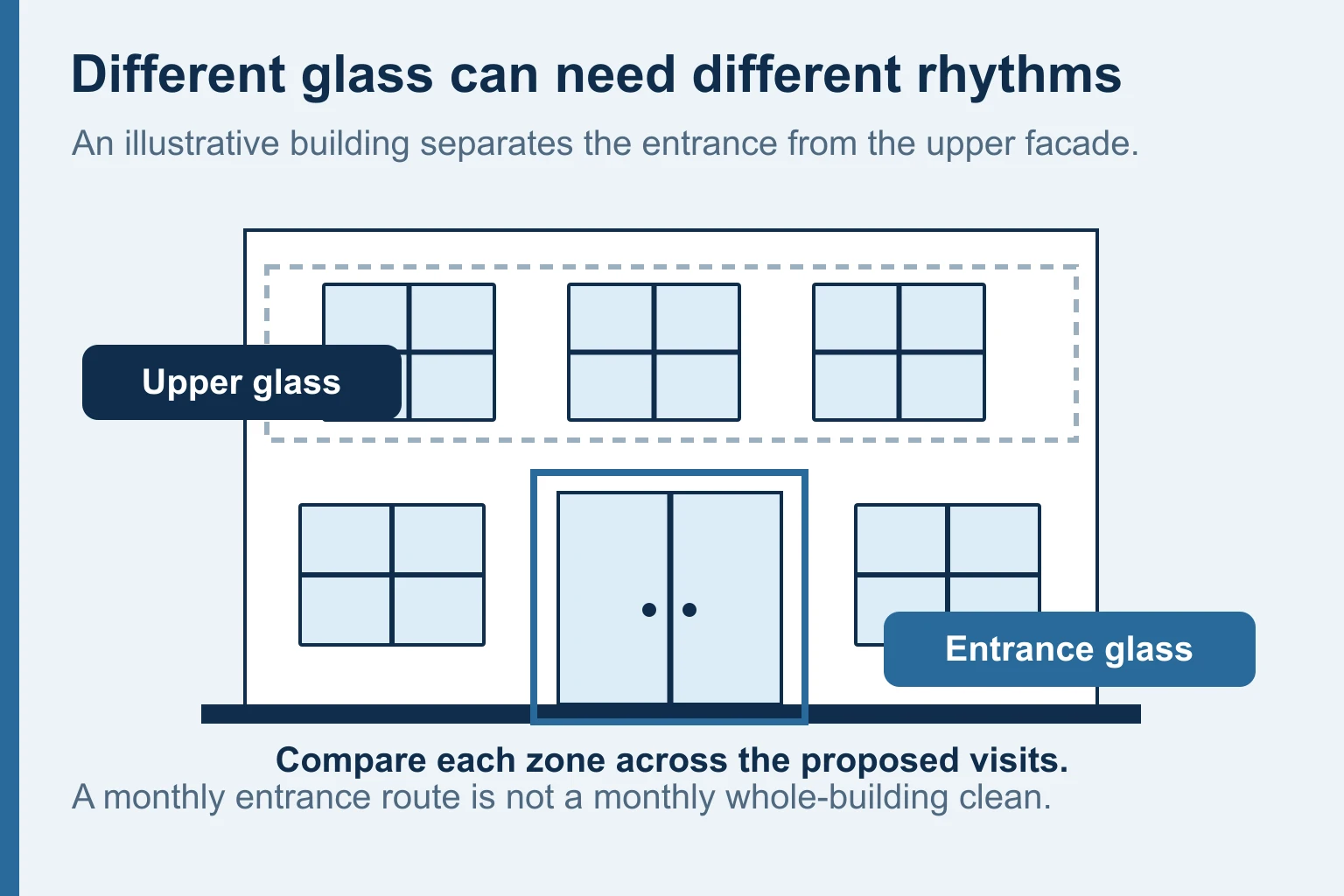
Divide the building into useful zones
Start with the glass people touch and see up close: entrance doors, sidelights and customer-height display panes. Then identify upper exterior windows, rear elevations and interior partitions. At a home, the same principle can separate patio doors from upstairs bedroom glass. These groups may differ in soiling, visibility and access even when they belong to one building.
Window Gang’s San Antonio page reviewed October 30, 2026 listed window cleaning, gutters and other exterior work with a local service-area list. Texas Window Washing’s reviewed pages listed residential and commercial glass, selectable detailing, screens and solar panels. Ask each provider to respond to your zones rather than comparing a broad package name with a custom visit description.
A visit count needs a surface count beside it
Write the proposed visits down the page and the zones across it. Mark which boxes are included. A monthly route for entrance doors plus occasional upper-glass cleaning is different from a monthly wash of every pane. So is a visit that includes outside storefront glass while excluding interior displays. The grid shows what an annual total actually buys without requiring either company to change how it sells service.
- Entrance zone: door faces, sidelights and any nearby customer-height panes.
- Upper or less-used zone: named windows and a proposed interval.
- Interior zone: partitions or room-side glass requiring a different access window.
- Detail work: screens, tracks or residue assessment on the visits selected.
Compare two schedules for one property
Imagine an office whose doors collect fingerprints quickly while upper exterior panes remain acceptable for longer. One proposal puts all glass on a single schedule. Another separates entrance visits from wider building visits. Compare the number of times each surface is cleaned, the total cost and the occasions when staff must provide access. More visits can be useful, but only if the extra work addresses a real need.
For a home, a similar comparison might separate frequently handled patio doors from the rest of the exterior. Ask whether a smaller repeat scope is offered and what conditions apply. The provider may prefer a whole-property visit or have a minimum charge. Learn that from the proposal instead of assuming a split schedule is always available or cheaper.
Keep a bundle from hiding the glass rhythm
If gutters or another exterior task are part of a proposal, give them separate calendar entries. A seasonal property service does not establish which window faces will be cleaned that day. Ask whether the glass line changes on those visits and how nearby work affects the finish. This is particularly helpful when comparing a multi-service company with one whose offering centers on glass.
Also ask about the first visit. An initial clean can have different work from later route stops. If it includes screens, interior panes or assessment of persistent marks, identify whether those tasks recur. A maintenance figure becomes misleading when the customer assumes the first visit’s extras repeat indefinitely.
Choose and adjust using the zones
After the first cycle, look at the areas that prompted the request. Did the entrance need more attention while upper windows remained acceptable? Did interior access make a planned visit impractical? Ask about changing that zone before increasing the entire building’s frequency. The NGA/IWCA guidance still applies to any proposed method: identify the glass and coating and follow the relevant care instructions.
Select the company that offers a workable arrangement for the actual zones, with clear limits on reach and scope. Current insurance and suitable access remain questions to resolve with the provider, but a generic brand comparison cannot decide the frequency for you. Your surface-by-visit grid makes that decision visible.
Sources and further reading
Make the entrance route specific
For a business, use the storefront guide to separate regular door and frontage work from occasional detail cleaning.
Map a storefront route