
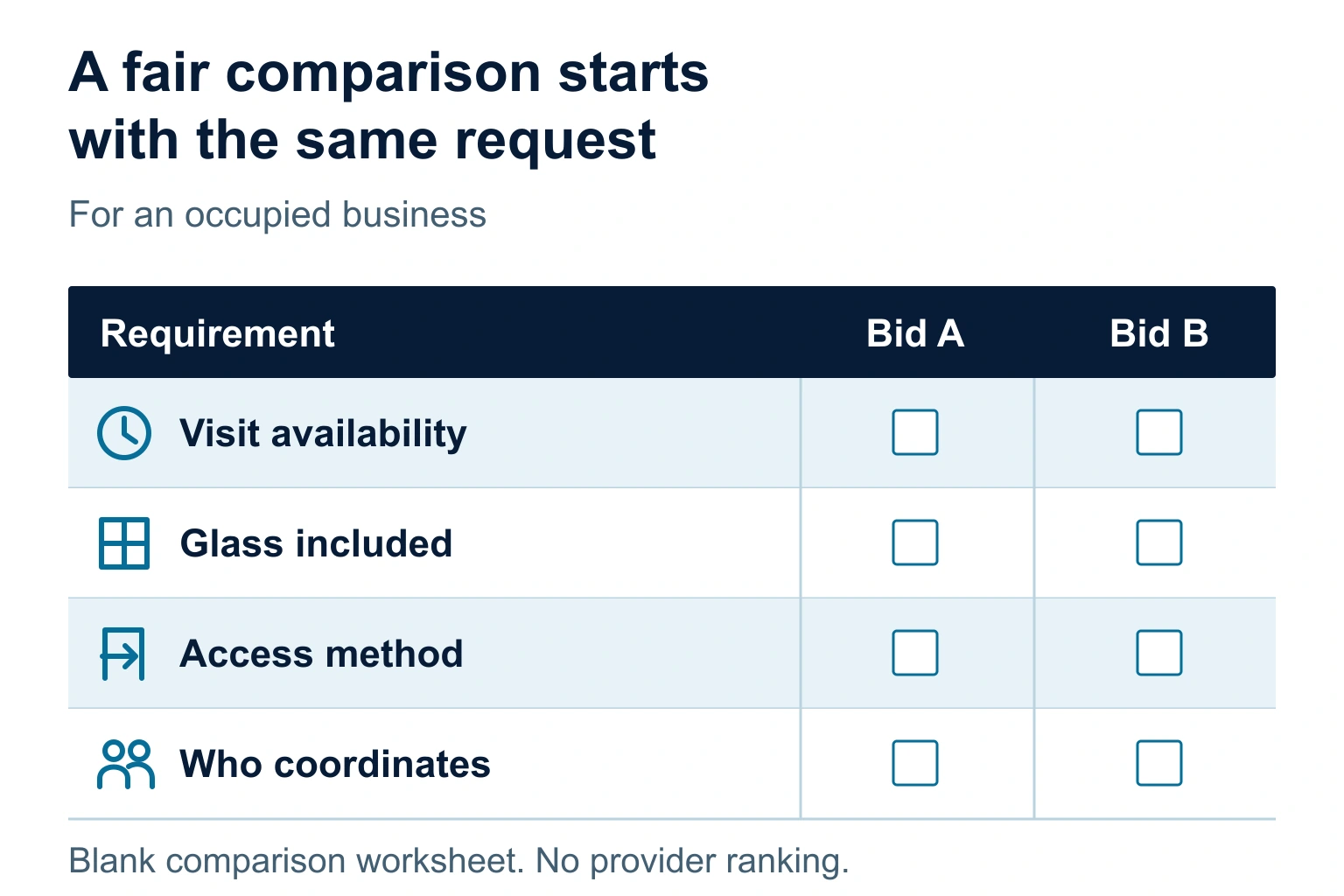
Set requirements before contacting candidates
Write the non-negotiable requirements for this building: the glass being purchased, chosen sides, usable work times, difficult elevations, and the property’s purchasing requirements. Separate requirements from preferences. A preference for a certain arrival day should not obscure a requirement for interior access to a controlled space.
Give every bidder the same information. Include photographs showing the approach to difficult glass and any known film, coating, or construction residue. The point is not to dictate the contractor’s method but to let candidates explain how they would meet the same request. If the building description changes during bidding, send the revision to all candidates.
Use answered, unclear, and excluded as the first scores
Before assigning numbers, mark each response as answered, unclear, or excluded. Answered means the written proposal identifies what will be provided; it does not by itself prove performance. Unclear means a follow-up is needed. Excluded may be acceptable if the property can procure that item separately, but it must remain visible when totals are compared.
- Glass: are the requested zones and sides identified?
- Access: does the proposed method address the actual elevations and site constraints?
- Timing: can the vendor describe a workable visit within the available window?
- Conditions: are ordinary washing and uncertain deposits distinguished?
- Purchasing: has the vendor answered the property’s documentation requirements?
- Follow-up: is there a clear way to report a question after the visit?
Review essential exclusions before using optional preferences to break a tie. A candidate that cannot cover a required elevation may still suit a smaller separately defined task, but it does not meet the original whole-building request. Conversely, an optional detail that the property does not want should not make another proposal appear more complete by default. Adjust the purchasing decision deliberately: either procure the required work together or describe the split purchase and its remaining responsibility clearly.
Example: why two totals cannot yet be compared
Imagine one hypothetical proposal covering exterior storefront panes and another covering both sides of entrance doors plus interior partitions. Put those surfaces into rows. Ask the candidates to revise their proposals to the desired selection before concluding that either total is better value. No market price is implied by this example.
Do the same for the first visit and later recurring visits. An initial detail clean may have different work from a maintenance route. A lower recurring total can be understandable if the tasks differ, but it should not be presented as the same service at a discount. Keep the selected first-visit and repeat-visit descriptions beside each other.
Check the evidence that matters to this building
A review can describe a customer’s experience but may not answer whether a contractor can reach this upper elevation or manage these tenant hours. Ask for a relevant reference and describe the similarity you want to understand. A comparison with another occupied office is more useful when the access and interior arrangements resemble the proposed work.
Route insurance and other purchasing documents through the property’s normal review process. Ask the contractor to explain its access method; OSHA publishes equipment-specific fall-protection standards. For questionable glass conditions, NGA/IWCA guidance provides a basis for asking about manufacturer instructions and appropriate evaluation. These are concrete bid questions, not reasons to assume every company has the same capability.
Make a selection with open questions visible
Before award, resolve unclear answers or name any item intentionally procured elsewhere. Keep the final proposal version and the reason it fit the building. If a first visit will be used to review the arrangement, agree on what will be checked: the purchased glass, the workable timing, and how any remaining condition is communicated.
Texas Window Washing lists several commercial property types on its public service page. Treat that as a reason to request a proposal under this scorecard, not proof of a ranking or price advantage. The selected vendor should be the one whose response and supporting information fit this property’s requirements. At renewal, compare the current building needs with the original purchase instead of assuming the same bid still applies unchanged.
Sources and further reading
Apply the scorecard to a service proposal
Review the listed commercial work and compare it with the building requirements you prepared. Resolve the differences in the written bid.
Review commercial services