
Name the material and the problem
Before calling, photograph each side of the building in dry daylight. Note whether the surface is cement stucco, EIFS, brick, painted siding or unknown, plus any cracks, loose coating or leaks near windows. Describe the stain: dust, algae, irrigation marks, rust and efflorescence can call for different approaches. A contractor who diagnoses everything from a distant photo as “mildew” may miss an underlying wall or moisture issue. If the wall system is uncertain, ask how they will identify it before cleaning.
Ask for a method matched to the finish
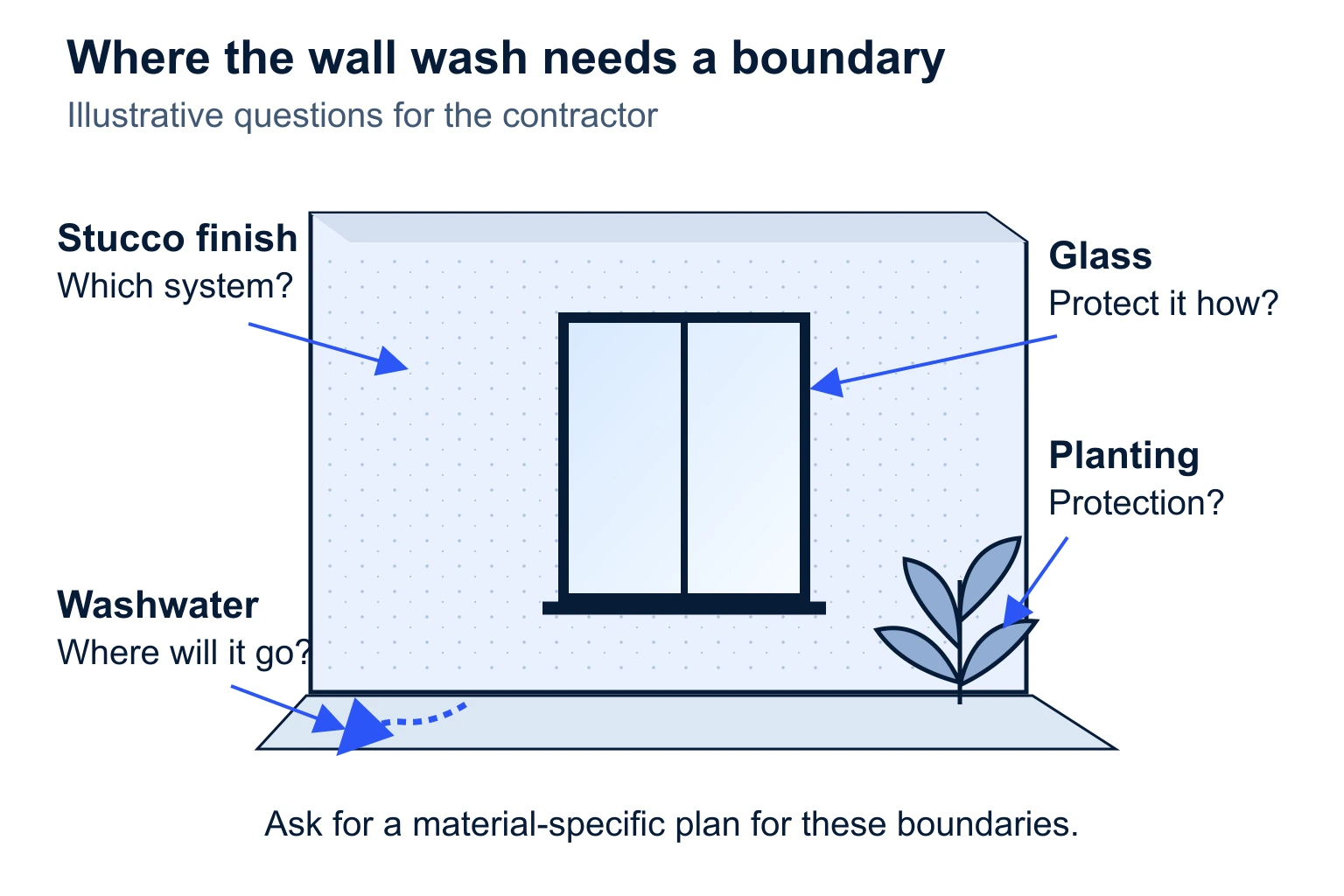
The exact product matters. Sika’s Parex technical bulletin limits pressure and nozzle distance for its EIFS and stucco finishes; Dryvit also publishes separate care guidance. Neither document licenses the same setting for every wall. A strong bidder can point to the manufacturer instructions or explain why a qualified specialist should inspect an unknown finish. Ask which solution is proposed, whether a small test area will be used, and what the wall will look like after it dries.
Walk the water route
San Antonio’s stormwater guidance for businesses calls for keeping washwater and pollutants out of storm drains. On a lot sloping toward a street inlet, that may require a different containment plan than a lot draining to soil. Ask where rinse water will go, how any detergent will be handled, and what will protect plants, windows, electrical fixtures, doors and neighbors’ property. The answer should be specific to the site; “we always rinse everything” is not a runoff plan.
Compare evidence and a written scope
- Ask for photos of similar materials before and after they dried, with permission to contact a recent customer if offered.
- Request proof of current insurance and a written scope identifying surfaces, stain limitations, cleaner, test area and exclusions.
- Confirm whether windows will be washed after wall cleaning or merely rinsed; wall wash can leave residue on glass.
- Ask whether cracks, caulk failure or coating repairs are outside the job, and who decides if cleaning should stop.
The FTC recommends checking references and reviews with a critical eye and obtaining multiple detailed estimates. Price becomes comparable only when both bidders are describing the same work. Ask one bidder to explain why a large difference exists rather than assuming the lowest offer is either a bargain or a problem.
Listen for a diagnosis that leaves room for uncertainty
A useful provider can distinguish what is known from what still needs inspection. “We can see surface soil, but need the finish information before selecting treatment” is a more usable answer than an immediate promise that every dark mark will disappear. Ask what would cause the company to decline or pause the job. For an unknown or visibly damaged finish, a referral to a wall-system specialist may be the appropriate outcome. A provider need not promise a repair or diagnose moisture damage to explain the limits of its cleaning service.
A useful first-call script
Try this first call: “My two-story house has a stucco-like finish with dark streaks below two windows and one hairline crack. I do not know the wall manufacturer. How would you identify the finish, test a section, protect the windows and route the washwater away from the street inlet?” The response should reveal whether the provider is listening to the property, explaining limits and willing to inspect before promising a result. Do not select a cleaner solely because the person immediately names a chemical or says every wall can take the same pressure.
Ask for examples that match the wall, not just the color
When reviewing past work, ask what the actual wall system was, what condition was present, and whether the after photo shows the dry result. A bright white wall in a photograph may be a different finish from yours. If a customer reference is offered with permission, ask whether the cleaning revealed a repaired patch, left an expected mark or required a change after the test. These questions are more revealing than asking only whether the customer liked the crew. They test whether the bidder can connect a visible result to a material, an identified problem and an honest limitation.
Use a specific follow-up when the bids differ
Suppose one company describes a compatible wash for the front wall while another includes all elevations and a separate window-cleaning step. This is an illustrative comparison, not a ranking of local businesses. Ask each to identify exactly which wall and glass surfaces its offer covers, then explain how any finish uncertainty affects the proposal. A lower total for fewer surfaces is not the same purchase. Keep wall repairs separate from cleaning and ask who handles them if the test reveals a concern. Texas Window Washing’s confirmed public services concern glass and related work; this guide does not offer wall washing on its behalf.
Sources and further reading
Still unsure what the wall needs?
Review how finish identification and a dry test separate removable soil from a repair concern.
Read the stucco cleaning guide