
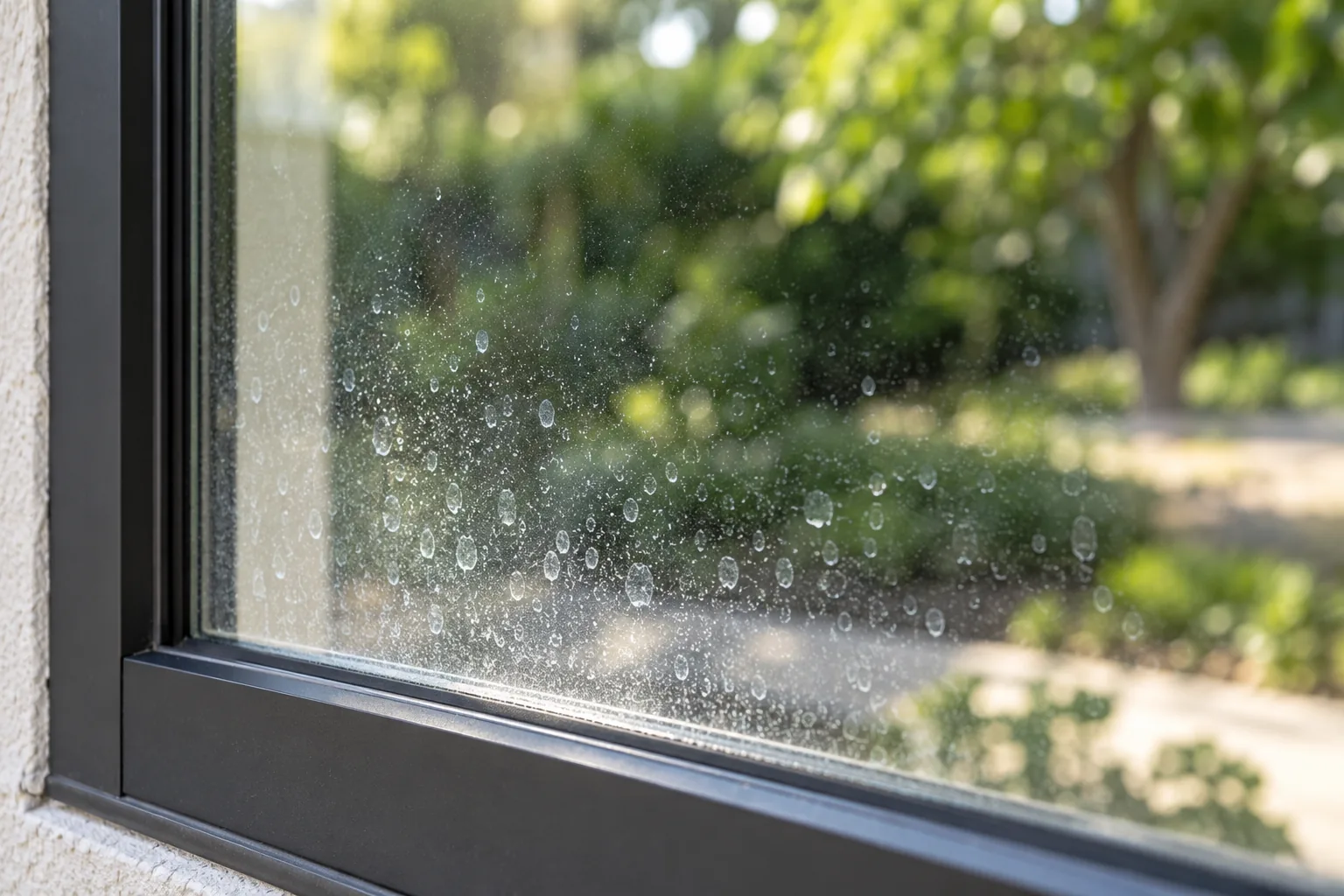
Why San Antonio water can leave a film
San Antonio Water System says water it provides is typically 15 to 20 grains per gallon hard, with naturally occurring calcium and magnesium. The U.S. Geological Survey notes that hard water can leave a film on glass. This helps explain why sprinkler overspray, followed by evaporation, can produce repeating spots on a window. It does not prove that a particular pane’s clouding is mineral buildup; soap residue, damaged coatings and etched glass can look similar from a distance. Water supply and hardness also vary outside SAWS territory.
Find the pattern before buying a treatment
- Check whether the marks align with a sprinkler head, drip line or shower spray, and photograph the pane when dry.
- Compare a protected pane with an exposed one, and note whether spots are concentrated at the lower edge or behind a screen.
- Tell the cleaner if the glass has tint, film, a low-e coating, or a known manufacturer cleaning rule.
- Ask for a small, documented test area before authorizing whole-house stain removal.
A test patch can show whether a deposit lifts, whether the glass underneath remains cloudy, and whether a proposed method changes a coating. The National Glass Association and International Window Cleaning Association say glass type and exposed coatings should be identified before cleaning. They warn against routine metal scraping and say razor blades should never be used on coated glass. A cleaner cannot infer safety from appearance alone.
Routine washing and restoration are different scopes
Routine window washing removes ordinary soil from the surface. Mineral stain work may take extra inspection, a separate process and additional time; permanent etching or coating damage may not be reversible by cleaning. The current Texas Window Washing residential page lists hard-water stain removal as a selectable specialty service rather than an automatic inclusion. Ask that the estimate identify affected panes, test results, process, exclusions and a realistic description of what improvement is expected.
Prevent the next round of spots
If irrigation reaches the window, adjusting the head or schedule is more durable than repeatedly removing deposits. Ask a landscaper or irrigation contractor to check the spray pattern rather than having a glass cleaner alter the system without that service being in scope. Use the water provider shown on the property bill before quoting any local hardness number. Boerne, for example, says hardness varies within its own utility system, so a San Antonio-wide figure is not a property-level test.
Choose the least aggressive next step
For a small patch, the first question is whether ordinary washing changes the mark. If it does not, stop before trying a random household acid, scraper or abrasive pad: exposed coatings and heat-treated glass call for different care. A reputable restoration proposal should describe why a method is suitable for the identified pane, what a test patch showed and when replacement or a glass specialist may be more sensible than repeated chemical work. Record the condition in daylight so a later comparison is fair.
Check which surface actually carries the mark
Look from both sides of the pane where that is possible from the ground or floor. A spot that looks prominent indoors may still be on the exterior surface. If you cannot tell whether the clouding is on an accessible face, between panes, or associated with a film, say that explicitly. Do not label it mineral staining merely because it appears white. That distinction helps a glass professional decide what to inspect and avoids asking a cleaner to remove something from a surface that is not responsible for the appearance. Do not dismantle a glazing unit or peel film to investigate.
Read a sprinkler pattern across adjacent panes
In an illustrative example, the lower half of one exterior window has repeated spots while an upper pane under an overhang looks clear. That pattern supports asking about overspray, but it does not prove the lower glass is undamaged or that a specific chemical will be suitable. Compare several affected and protected panes, mention any known film or coating, and ask what an appropriate test shows after drying. If a removable layer clears but clouding remains, the next question is what that remaining appearance represents. The decision may be accepting partial improvement or seeking a glass specialist rather than escalating the treatment.
Distinguish a new deposit from an unfinished result
After cleaning, compare a dry photograph with a later one taken from the same position. New spots that follow another sprinkler cycle raise a different question from a mark that never changed during the original test. The first calls for attention to the water exposure; the second calls for reviewing the pane condition and the limits of the treatment. Ask the irrigation provider to address spray contact when appropriate. A window-cleaning visit does not change the source of repeated water exposure, and a water-hardness figure alone cannot explain every cloudy pane.
Sources and further reading
Separate the wash from the spot assessment
See how residential glass, screens and specialty stain work can be identified separately.
View residential cleaning options