
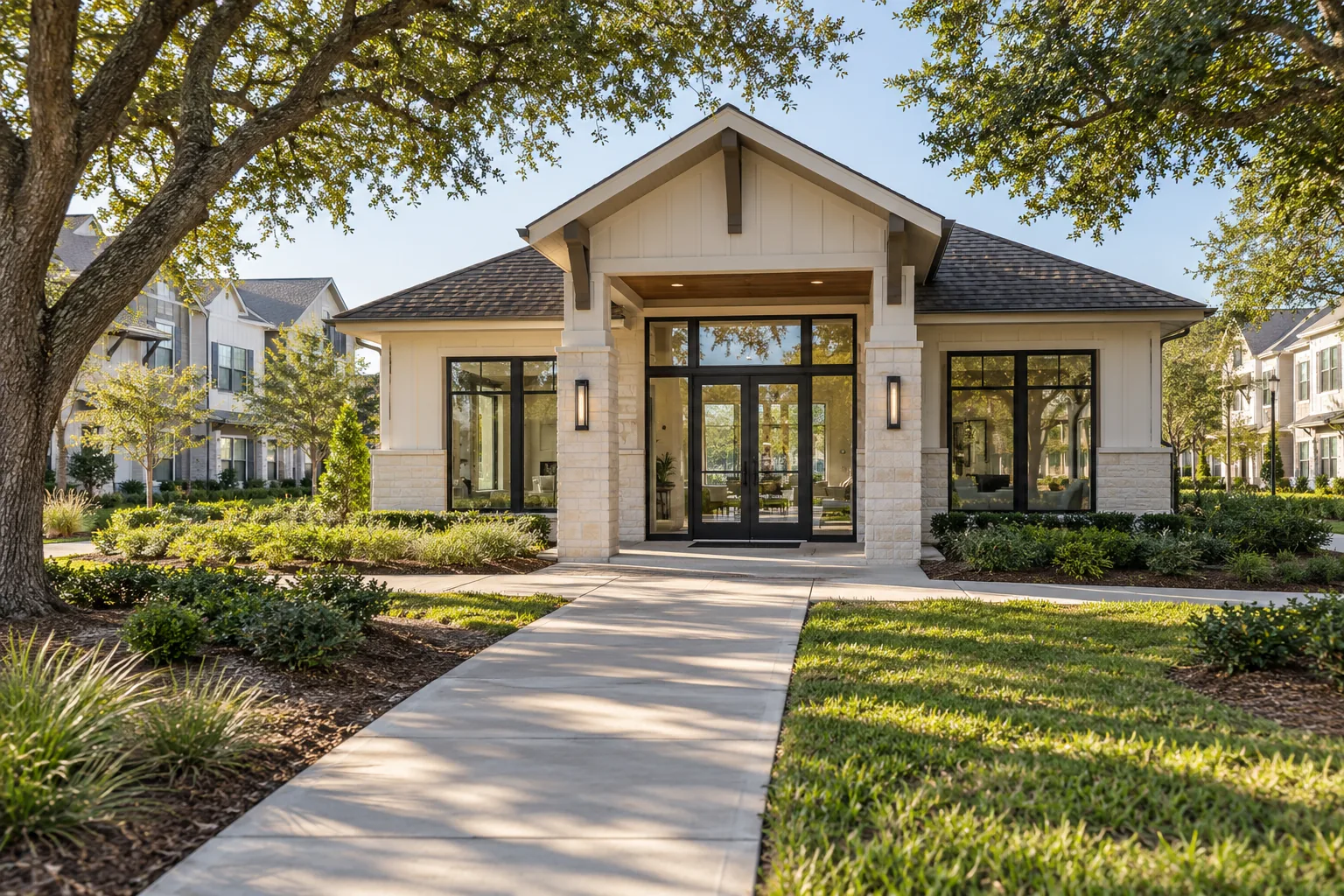
Establish the association’s boundary before counting windows
A clubhouse, pool-house entrance, gatehouse, and residential courtyard can appear to be one connected property while having different maintenance responsibilities. Use the association’s governing documents and management process to identify the areas it intends to purchase. The cleaner can price a defined request, but should not be expected to interpret ownership or decide which resident’s windows belong in the contract.
Mark the proposed common-area glass on a simple plan. Name the facilities as residents and staff know them, and identify interior versus exterior work. Where responsibility is unresolved, keep that item open for the association rather than asking bidders to make different assumptions. The resulting proposals will describe the same association purchase.
Keep optional homeowner work out of the common-area total
If management wants to tell residents about optional individual service, decide how those requests will be handled. A resident might contact the vendor directly, or management might coordinate inquiries. Either arrangement needs a clear explanation of who selects the work, authorizes it, pays for it, and supplies access. A name on an interest list is not an approval for interior entry or a particular service package.
Do not promise a shared rate, travel arrangement, or visit date until the vendor has confirmed what it can offer. A cleaner visiting the clubhouse does not automatically have time to add multiple homes. State the association-funded work separately so the board and owners can understand what the shared budget covers.
When management communicates the visit, distinguish a notice from a request for individual service. The common-area notice can explain the facility affected, timing, and any preparation residents need to know about. An optional homeowner invitation should explain the separate inquiry route without implying that the association has inspected or selected work inside each home. Keep the two messages understandable on their own so a resident does not mistake a common-area contract for a service automatically arranged for the entire neighborhood.
Plan around the way residents use shared spaces
Check clubhouse bookings, pool activity, committee meetings, and any entrance that residents rely on. A facility described as unoccupied may still have a scheduled event or staff preparing it. Ask the manager to identify a usable period and the person who can release the room. Tell residents only the preparation or temporary arrangements relevant to the approved visit.
For high glass or equipment near shared paths, the contractor should describe the proposed method and limitations. OSHA publishes equipment-specific fall-protection requirements. For unknown deposits or coated glass, NGA/IWCA cleaning guidance supports attention to product instructions and an appropriate assessment. Keep these practical questions attached to the relevant common area rather than turning them into a blanket claim about every residence.
Example: a clubhouse beside privately maintained homes
Consider a hypothetical association choosing to clean its clubhouse and shared entrance while several nearby homeowners also express interest. The board can proceed with the defined common-area bid while individual requests follow their own authorization route. The vendor should know where the common scope ends before the neighborhood visit begins.
If one owner asks the crew for additional work on the day, refer the request to the agreed process. It should not appear later as an unexplained addition to the association’s invoice. The distinction also protects residents who did not request service from being included simply because their windows face the same courtyard.
Present the board with an actual choice
- Common-area base: the facilities, sides of glass, and selected details being purchased.
- Optional items: work the board can add or defer without changing the meaning of the base.
- Timing: the facility bookings or resident arrangements needed for the proposed date.
- Unknowns: any ownership question, difficult elevation, or condition still awaiting an answer.
When bids differ, ask for a revised response to the same common-area list before comparing totals. Preserve the board’s selected version with the management records. At renewal, review whether facility use and visible soiling support the same arrangement; the decision should follow those shared spaces rather than a generic seasonal schedule.
Sources and further reading
Define the association purchase
Identify the common-area glass the association has chosen to arrange. Keep optional homeowner requests separate.
Describe common-area glass