
Three kinds of dirty glass lead to different purchases
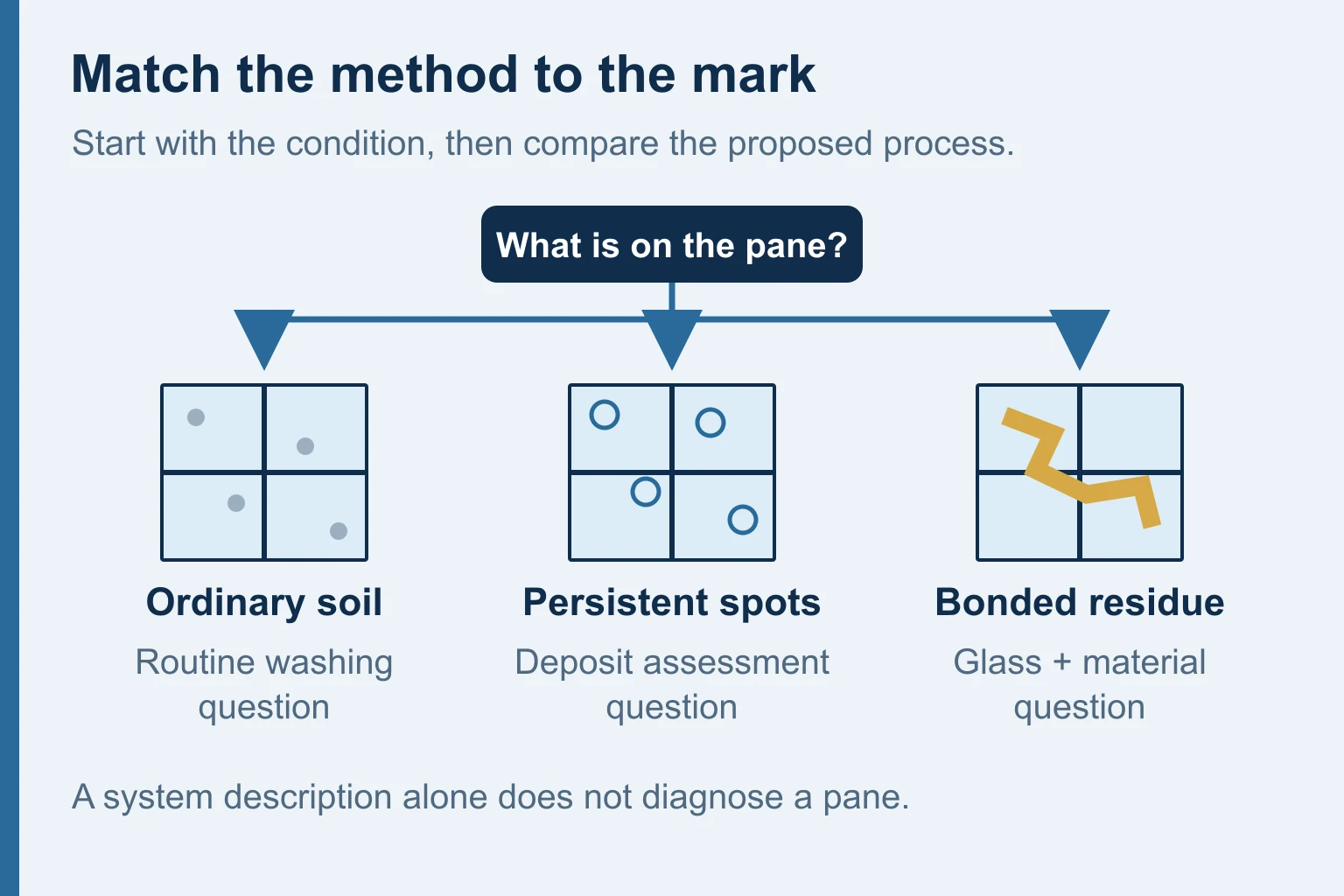
Start with the mark rather than the equipment. Loose dust and fingerprints are ordinary washing concerns. Repeating white spots where sprinklers reach a pane suggest a question about deposits. Paint, sealant or adhesive after building work introduces another material entirely. These are useful categories for describing the problem; a photograph cannot reliably determine the glass type, coating or cause of every cloudy patch.
SAWS reports that water it supplies is typically 15 to 20 grains per gallon hard. That explains why dried water deserves attention, but it does not diagnose your pane or describe every San Antonio-area water source. A surface deposit, damaged coating and mark beneath an accessible surface can require different next steps.
What the two published menus establish
In the October 30, 2026 source review, Texas Window Clean Team listed residential and commercial window cleaning, screens, solar panels and power washing, and described a three-stage pure-water system. Texas Window Washing listed interior and exterior washing, selectable screen and track work, hard-water stain treatment and post-construction glass work. These are advertised categories and equipment descriptions, not a comparison of measured results.
A provider should connect that description to your glass. Ask whether the proposed visit is intended to remove ordinary soil, assess a deposit or treat a known residue. A rinse method and a restoration process answer different questions. Neither a long equipment list nor the word specialist establishes which treatment is necessary.
A lower-pane example
Imagine a home with dusty upper windows and cloudy lower panes beside the lawn. The owner wants exterior glass and screens cleaned, but the clouding is the reason for calling. Request routine washing across the selected windows and assessment of the named lower panes. This keeps the uncertain condition visible without assuming every window needs specialty treatment.
Compare two possible replies. One cleaner might propose washing first and evaluating what remains; another might request an inspection before quoting those panes. Ask what information each step will produce. If ordinary washing reveals a lasting mark, you need to know whether the next recommendation concerns removable deposits, a coating or a separate glass issue. A conditional answer can be more useful than an unexplained removal promise.
Questions that reveal whether the method fits
- Which part of the proposed process addresses the mark in my close-up?
- Will screens be removed so the selected exterior glass can be reached?
- What glass or film information do you need before choosing tools?
- Would a representative test help, and what would its result tell us?
- If the mark remains after washing, what decision comes next?
The NGA/IWCA guidance emphasizes identifying glass and exposed coatings and following manufacturer instructions. It cautions against routine metal scraping. A proposed test should therefore establish suitability and likely improvement, rather than become permission to keep increasing treatment until every visible mark disappears.
Choose the answer, not the most impressive tool
For ordinary maintenance, compare which glass sides and screen tasks the visit covers. For persistent spots, compare the assessment and realistic endpoint. For construction material, look for knowledge of the residue and glass instructions. If you also want power washing, confirm it separately: Texas Window Washing’s reviewed residential menu does not establish that service as an included offering.
Keep one dry photograph of the concern and compare the treated pane from a similar position afterward. The useful outcome is an informed decision about that condition: resolved by washing, improved by an agreed treatment or referred for a different assessment. That is a stronger basis for choosing a provider than assuming one water system makes it best for every pane.
Sources and further reading
Work out what the mark needs
Use the hard-water guide to separate ordinary washing from a targeted deposit assessment before comparing methods.
Understand persistent spots