
Describe the symptom before ordering the treatment
Use ordinary descriptions: dust outside, fingerprints inside, glare at a particular hour, reduced privacy or a mark that appears beyond the surface you can reach. State when you first noticed it and which windows are affected. You do not have to diagnose a failed assembly or identify a coating yourself. A useful inquiry leaves room for the appropriate provider to assess what is happening.
Window Genie’s San Antonio page reviewed October 30, 2026 listed window cleaning and tinting, plus solar panels, gutters, pressure washing and holiday lighting. Texas Window Washing’s reviewed residential page listed washing, screens, tracks and sills, hard-water treatment and specialty glass tasks. Its reviewed menu did not establish film installation as an offering. Those differences make the problem you are buying help for especially important.
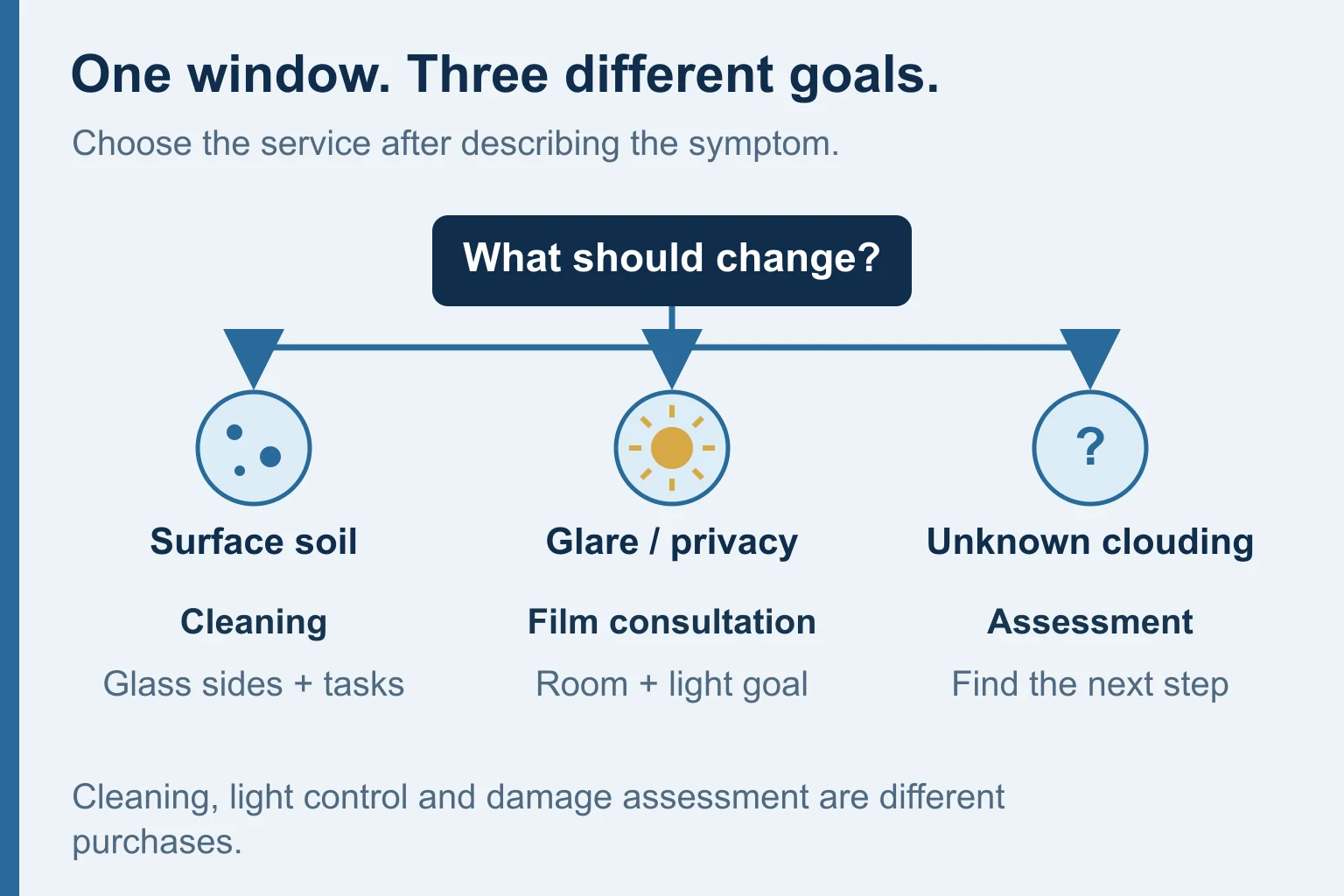
Use three separate decision paths
- Surface soil: ask for the glass sides and cleaning tasks you want completed.
- Glare or privacy: request a film consultation and explain the room, exposure and goal.
- Unknown clouding or damage: ask what inspection is needed before choosing cleaning or another treatment.
These paths can meet on one property without becoming one service. Cleaning does not itself change a window’s light-control characteristics in the way a film proposal intends. A tinting consultation does not establish that a scratch or sealed-unit concern can be repaired. Keep those expected outcomes distinct when a provider discusses several options.
A living-room example with two goals
Imagine a homeowner with fingerprints on existing glass and uncomfortable afternoon glare. This is an illustrative decision, not a customer project. A cleaning proposal should explain the surfaces being washed. A film proposal should explain the proposed product, suitability for that glass, installation and subsequent care. The owner can compare the two purchases without treating one as a substitute for the other.
If the owner wants both, ask who prepares the surface, when cleaning should happen and which instructions apply after installation. Do not invent the sequence yourself or assume the two services can share an appointment. The film provider’s requirements and the actual pane determine what coordination is needed.
Existing film changes the information a cleaner needs
Share the film brand, installation date and care instructions if available. Identify the treated rooms on a simple list; similar-looking windows may not all have the same surface history. If the presence of film is uncertain, say so before the visit. The NGA/IWCA guidance emphasizes identifying glass and coatings and following the relevant manufacturer instructions before selecting methods.
Ask whether an uncertain surface needs inspection or a representative test before treatment. Do not try an unfamiliar cleaner or scraper merely to produce a clearer photo. A provider should explain what information is missing and whether the surrounding routine work can proceed while that pane remains undecided.
Compare the proposal against the intended change
For cleaning, look for named glass sides, selected screen or track tasks and a realistic approach to deposits. For film, ask about the product, compatibility, the appearance you can evaluate and care after installation. For suspected damage, ask which specialist should assess it. A broad window appointment is too vague to settle all three.
Choose a provider whose response follows your actual goal. Window Genie’s published tinting category may make it a relevant contact for a film discussion; Texas Window Washing’s glass menu may make it relevant for a cleaning estimate. Neither fact establishes a universal winner. Confirm the current local offer and buy the service that addresses the problem you described.
Sources and further reading
Is the problem a persistent surface mark?
Read the deposit guide if cleaning is your goal and the cause of the clouding is uncertain.
Assess the spotting question