
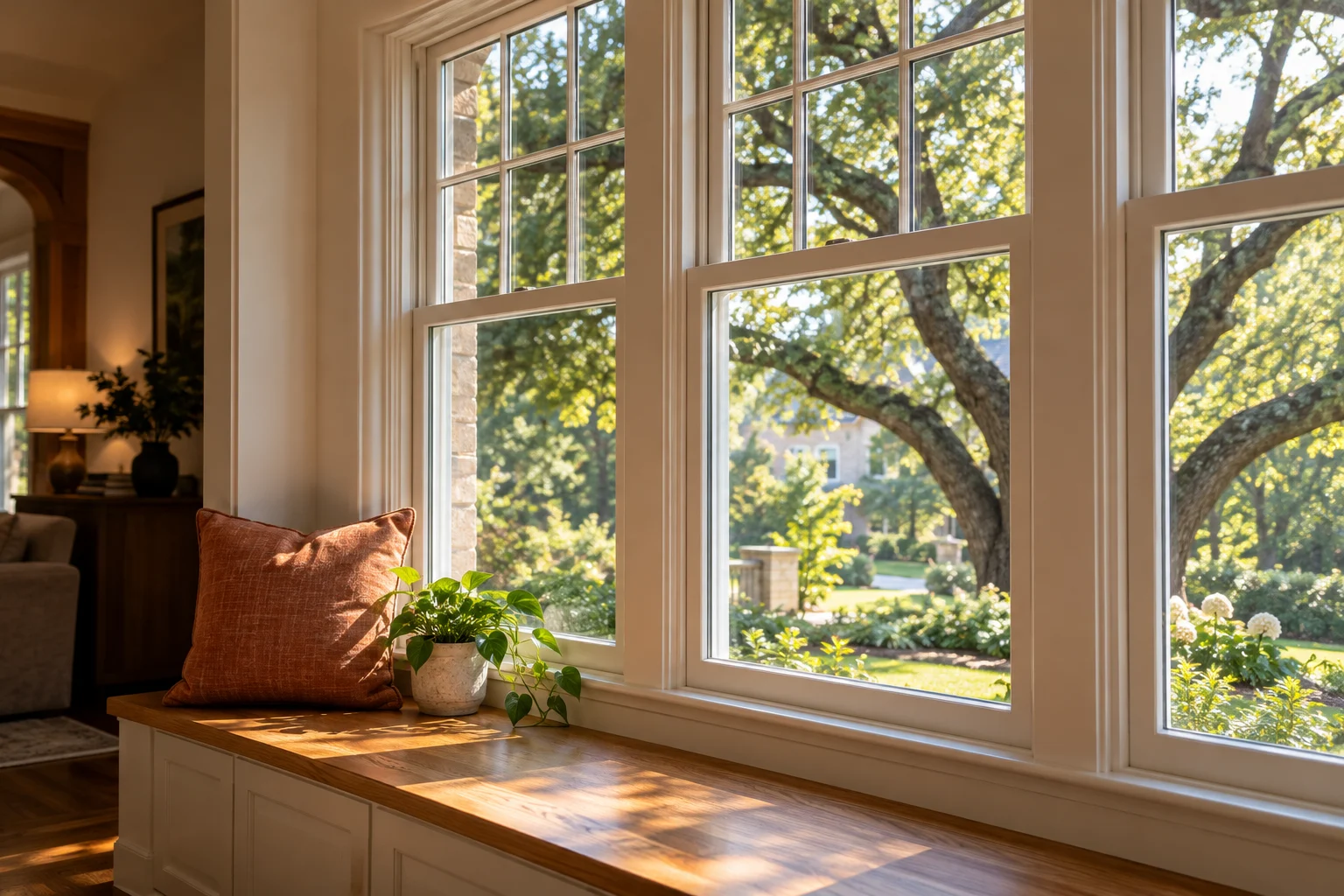
Identify what is glass and what surrounds it
Walk the home by window type. Note large view panes, divided lights, glass doors, skylights, and any surface with film or a coating. Then look at the materials immediately around them: painted joinery, timber, stone, metal, fabric, or a built-in seat can change how the area should be prepared. A close-up shows the pane; a wider photograph shows the setting the crew will actually encounter.
Collect available care information from the window, film, or finish supplier. Do not assume visually similar panes have identical surfaces. The NGA/IWCA cleaning guidance stresses manufacturer instructions and appropriate methods for architectural glass. Where the product is unknown, ask what needs to be identified before treatment. A request to be careful is less useful than a specific note that one elevation has an applied film.
Keep shower glass and exterior view windows as separate decisions, even when both are requested during one visit. The visible deposits, surrounding materials, and product information may differ. Describe the affected surface and any treatment history without assuming a method suitable for one can be transferred to the other. Ask the estimator to name the proposed assessment and selected work for each. This avoids turning a broad request for all the glass into an expectation of identical treatment throughout the property.
Decide who prepares the space beside the window
A piano, heavy planter, fragile ornament, or fitted drapery can make an ordinary pane difficult to reach. Discuss preparation before the visit. Identify what the homeowner will clear and what the cleaner has agreed to handle. Leave a difficult pane out until a workable arrangement exists instead of assuming furniture moving is part of glass cleaning.
Privacy and daily use matter as well. Bedrooms, home offices, and bathrooms may need to be released at different times. Choose a household contact who can show the crew the prepared rooms. If part of the home needs an escort, say so when scheduling the interior work. Photographs of the work area should avoid personal documents or belongings that do not help explain the cleaning task.
Describe divided panes and high glass accurately
A large opening with multiple small panes is not the same task as one uninterrupted sheet of glass. Show the divisions, opening style, screens, and any internal or external obstruction. Skylights and stairwell glazing also need a view of the surrounding approach. These details help the estimator discuss the actual work rather than rely on a broad room count.
For a high pane, send a photograph that includes the floor or exterior ground below it. Height alone does not explain the route. Ask the contractor to confirm which glass is within its proposed method and which needs a different assessment. Avoid rearranging the household around a whole-home promise while an important view window remains unconfirmed.
Use a representative pane to clarify a persistent mark
Sprinkler spots, renovation residue, and scratches can look similar from across a room. Describe the pattern and location, and disclose recent work around the glass. NGA/IWCA guidance supports a small test clean where the condition is uncertain. Ask what ordinary washing can establish and what would require a separate treatment decision.
For example, a homeowner planning the living-room view might approve washing the selected panes while one marked patio pane is evaluated. This hypothetical choice keeps the main visit useful without promising a result for the uncertain surface. If further treatment is proposed, consider its method and limits before agreeing. A clean pane and an undamaged pane are related expectations, but washing cannot correct every underlying condition.
Choose a finish that matches the rooms you use
- Name the rooms and view windows that are priorities.
- Choose interior, exterior, or both for each part of the home.
- List screens, tracks, sills, and other requested details individually.
- Identify film, specialty glass, surrounding finishes, and preparation still needed.
After cleaning, stand where the household normally views the glass. Review the selected sides and details, and discuss any remaining condition by pane. Keep the product information and useful preparation notes for future visits; those facts describe this home more accurately than a general premium-cleaning label.
Sources and further reading
Choose the work for each room
Review the home-cleaning options, then identify specialty glass, finishes, and preparation that need individual attention.
Review home-cleaning choices